Change Request - Schedule of Values - Bulk Actions - Add Line Items to New Commitment Change Order
 Updated
Suggested Prior Reading
Change Request - Schedule of Values - Bulk Actions - Commitments - New Change Order
View, Maintain and Save the new Line Items on a new Commitment Change Order Schedule of Values
If the Change Request Schedule of Values Line Item were added to a new Commitment Change Order (see Suggested Prior Reading above), the New Commitment Change Order form displays. See Commitment Change Order – Add - Form Layout and Navigation for more information on the layout.
The General component displays by default during the add but other Components can be switched to via the Form Navigation Menu Options.
The Contracted Company automatically defaults to the Commitment Company and can not be changed.
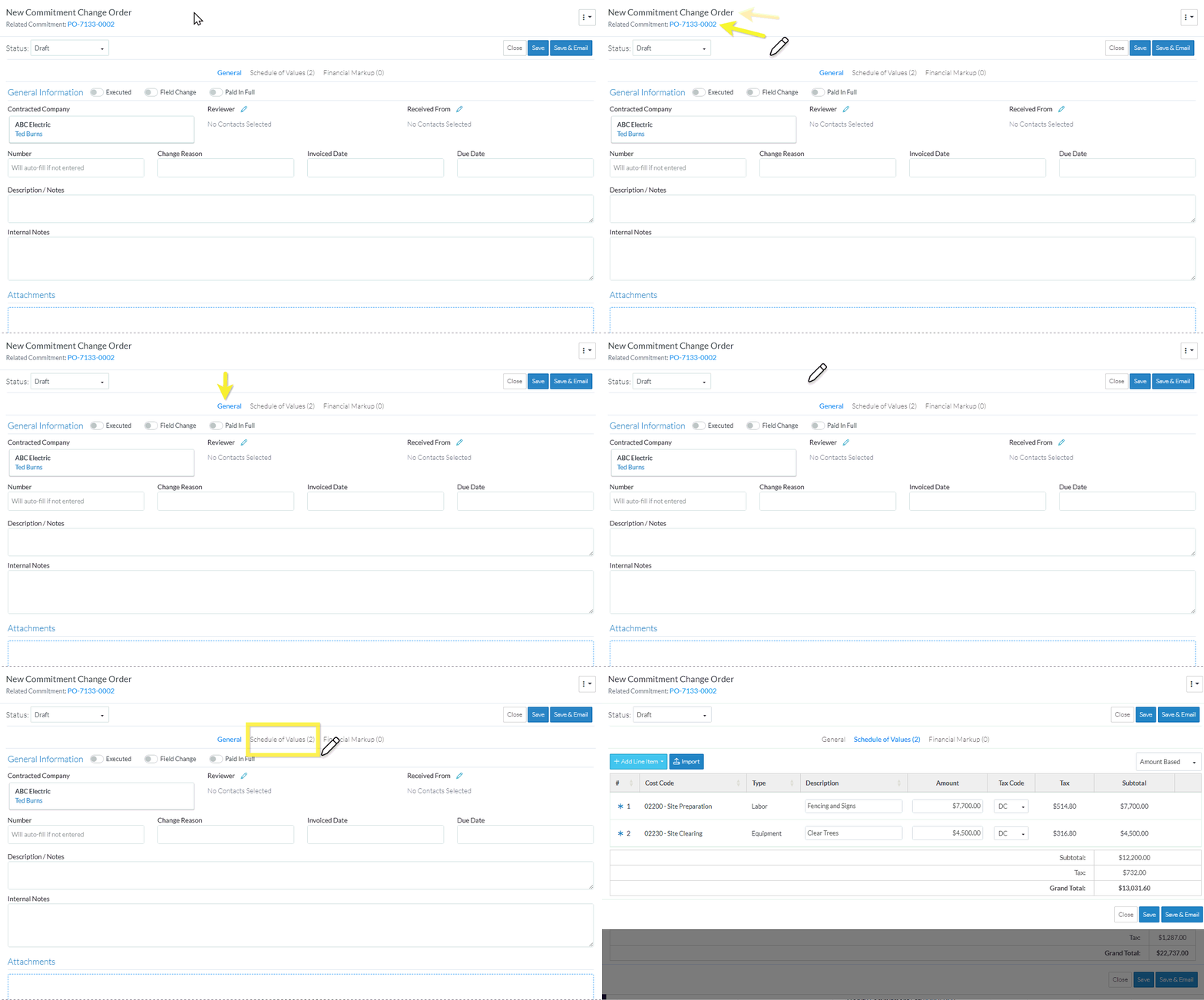
- View the Commitment Change Order Schedule of Values by clicking on the Schedule of Values on the Form Navigation Menu Options on the New Commitment Change Order form.
The Schedule of Values component for the Commitment Change Order displays.
The Status of the Commitment Change Order will impact the display and what information can be edited (see Commitment Change Order - Status for more information).Click here for an example of a Commitment Change Order with a Status that can be edited
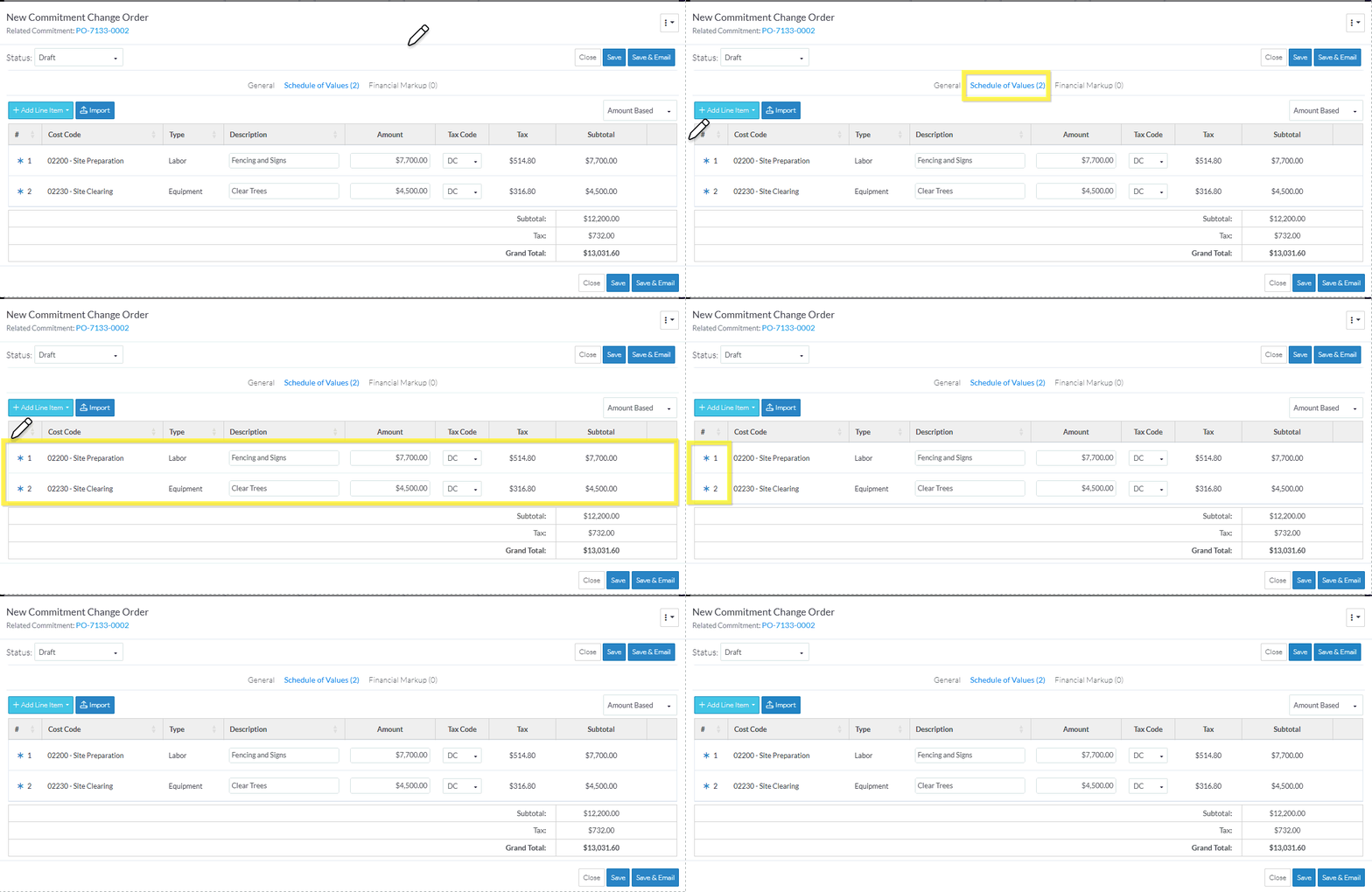 The Schedule of Values is automatically populated with the Line Items that were selected on the Change Request Schedule of Values. They display with a * blue asterisk before the Line Item # to indicate they were created from a Change Request.
Click here for an example of a Commitment Change Order with a Status that can not be edited
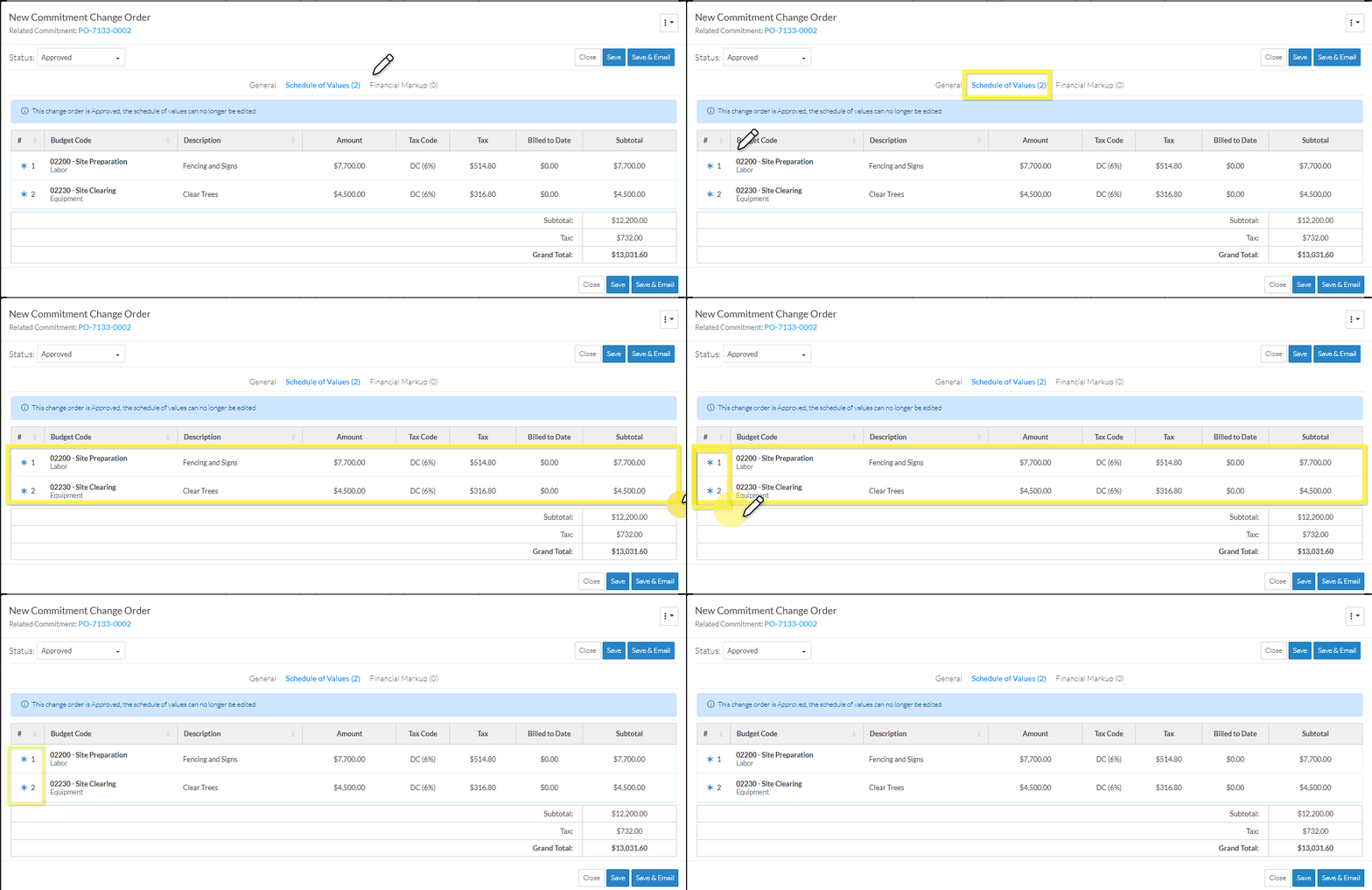 There may or may not be other already existing Line Items on the Schedule of Values.
Click here for more details on the information copied from Change Request Schedule of Values Line Items and what can be changed
The new Commitment Change Order inherits the Accounting Method set for the Commitment it is associated to and can not be changed.
The Sub Job (if used), the Cost Code and Cost Type are copied from the Change Request Schedule of Values Line Item and can not be changed. Note* The above example does not show Sub Jobs but if they were used they would display as the first column after the Line Number (see Sub Jobs - Overview).
The Description is copied but can be changed.
If the Change Request Schedule of Values is Amount Based and the Commitment Change Order Schedule of Values is Amount Based, the Revenue is copied to the Amount on the new Line Item. The Amount can be changed.
If the Change Request Schedule of Values is Unit-Qty Based and the Commitment Change Order Schedule of Values is Unit-Qty Based, the Quantity, Unit of Measure and Unit Price are copied to the new Line Item. The Quantity and Unit Price can be changed.
If the Change Request Schedule of Values is Amount Based and the Commitment Schedule of Values is Unit-Qty Based, the Quantity is set to 1, the Unit of Measure must be manually set and the Unit Price is set to the Revenue for the new Line Item. The Quantity and Unit Price can be changed.
If the Change Request Schedule of Values is Unit-Qty Based and the Commitment Schedule of Values is Amount Based, the Revenue is copied to the Amount on the new Line Item. The Amount can be changed.
The Tax Code is copied but can be changed. (The Tax Amount is calculated by multiplying the Tax Code percent on the Amount or the Qty multiplied by the Unit Price).
Financial Markups from the Contract (which will also have been copied automatically to the Change Request), are not copied to an existing Contract Change Order (Financial Markups that previously existed on the Contract Change Order are not impacted)
NOTE 1* Once a Line Item from a Change Request has been added to a Commitment Change Order (and the Commitment Change Order and its Schedule of Values saved) the Change Request Schedule of Values Line Item will be linked with the Commitment Change Order and it can not be added to another Commitment or Commitment Change Order. The Line item can be deleted from the Commitment Change Order and it will be automatically removed from the Line Item on the Change Request (i.e. it will no longer display in the Commitment column for the Line Item, but the rest of the Line Item is not impacted. It can then be added to a different Commitment or Commitment Change Order (see Commitment - Schedule of Values - Delete Line Item).
Note 2* Even though the Line Items from the Change Request are displayed on the Commitment Change Order, this is a working session and the Commitment Change Order and its Schedule of Values must still be saved to save those Line Items. - To maintain Line Items, see Commitment Change Order - Schedule of Values - Maintain when Line Items added from Change Requests.
- To maintain the General Information for the Commitment Change Order, see Commitment Change Order - Add/View/Edit - General.
- Optionally, to maintain Financial Markups for the Commitment Change Order, see Commitment - Financial Markup - Overview.
- Click the Save
 button (at the bottom of the form) to save the Commitment Change Order.OR
Click here for more information on the Save function.
This saves the Commitment Change Order including any information on the General, Schedule of Values and Financial Markups Components.
This list the function was invoked from displays. See Next Steps below.
Click the Save & Email button (at the bottom of the form) to save the Commitment Change Order and email it.OR
Click here for more information on the Save and Email function.
This saves the Commitment Change Order including any information on the General, Schedule of Values and Financial Markup components and sends an email with a link to the Commitment Change Order in JobPlanner (and optionally include the Commitment Change Order as a PDF attachment in the email). The Email can be sent to any Project Contacts. The Email Commitment form displays, see Email Commitment Change Order.
Click the Close button (at the bottom of the form) to close the form without saving the Commitment Change Order.
Click here for more information on the Close function.
If no information was changed or entered, the list the function was invoked from displays, see Next Steps below.
If information was changed, then an additional prompt displays indicating there were changes and additional prompts on what to do.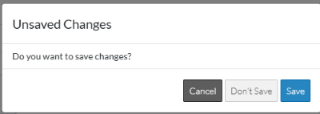
Click the Cancel button to cancel the Close action and return to the Commitment Change Order - Add form (see the steps above)
OR
Click the Don't Save button to cancel changes to the Commitment Change Order. The list the function was invoked from displays, see Next Steps below.
OR
Click the Save button to save the Commitment Change Order including any information on the General, Schedule of Values or Financial Markups components. The list the function was invoked from displays, see Next Steps below.
Next Steps
See the help below for the view applicable either Grouped List View or Simple List View (see Change Requests - Multiple Lists and Views for which one is applicable) and for the list the function was initiated from:
Click here for Grouped List View
OR
