Purchase Order - General - General Information - Purchase Order Number

'----Issue: 10/19/2026-01
Suggested Prior Reading
New Purchase Order - General Component (Examples & Steps)
OR
Purchase Order - View/Maintain - General Component - Edit (Examples & Steps)
Purchase Order Number
The unique identifier for the Purchase Order. The User can enter the Purchase Number or the system can automatically generate it.
Note* The system will allow duplicates of the Purchase Order Number as it can be entered by the user - it can also be the same as a Subcontract Number, however it is recommended to keep them unique.
Users that have Add, Edit or Admin permissions can enter, change or remove the Purchase Order Number.
For more information on where the Purchase Order Number is used, see Commitments - Fields - Usage and Configuration.
Purchase Order numbers do not have to be unique. More than one Purchase Order can have the same number (if manually entering it), however, this is not recommended in order to be able to find the Purchase Order.
This help assumes the New Purchase Order form OR the Purchase Order - View/Maintain form is displayed with the General component selected (see Suggested Prior Reading above).
New Purchase Order
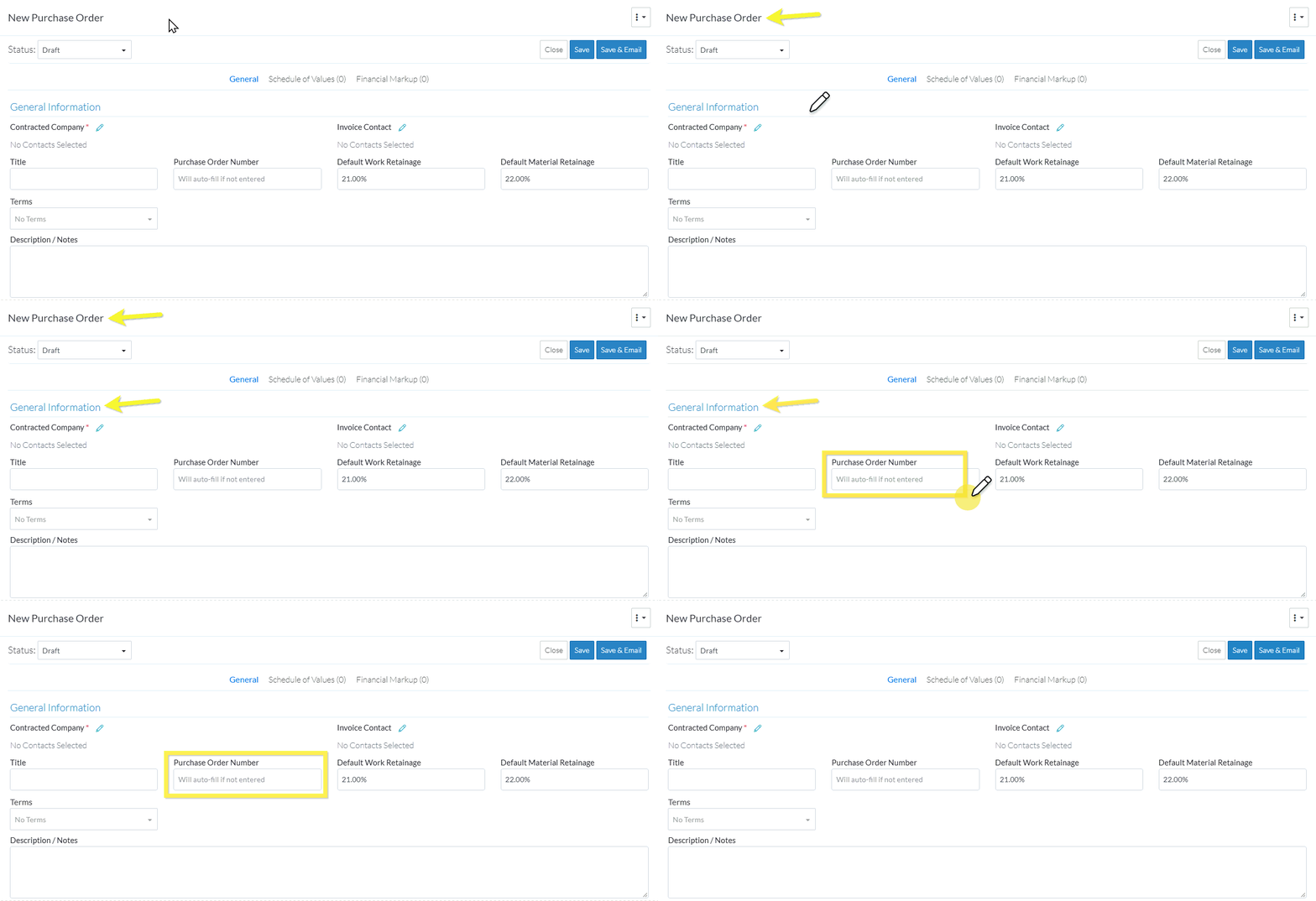
When creating a Purchase Order, the Purchase Order Number can be manually entered or it can be automatically generated by the system.
If the Purchase Order number is manually entered by the User - that is what the Purchase Order number is set to.
If the Purchase Order number is left blank during the add, the system will automatically generate the Purchase Order number using a format that is set by a user with permissions to change Settings for Commitments (See Settings - Commitments - Commitment Settings - Purchase Order Number Format for more information). This will happen when the Save function is invoked.
Click here for entering the Purchase Order Number for a new Purchase Order
In the example below, the Purchase Order is left blank so the system will automatically generate the Purchase Order number when it is saved.
Editing an Existing Purchase Order
Issue: 10/19/2026-01 - Can it be left blank or not even when required set to off.
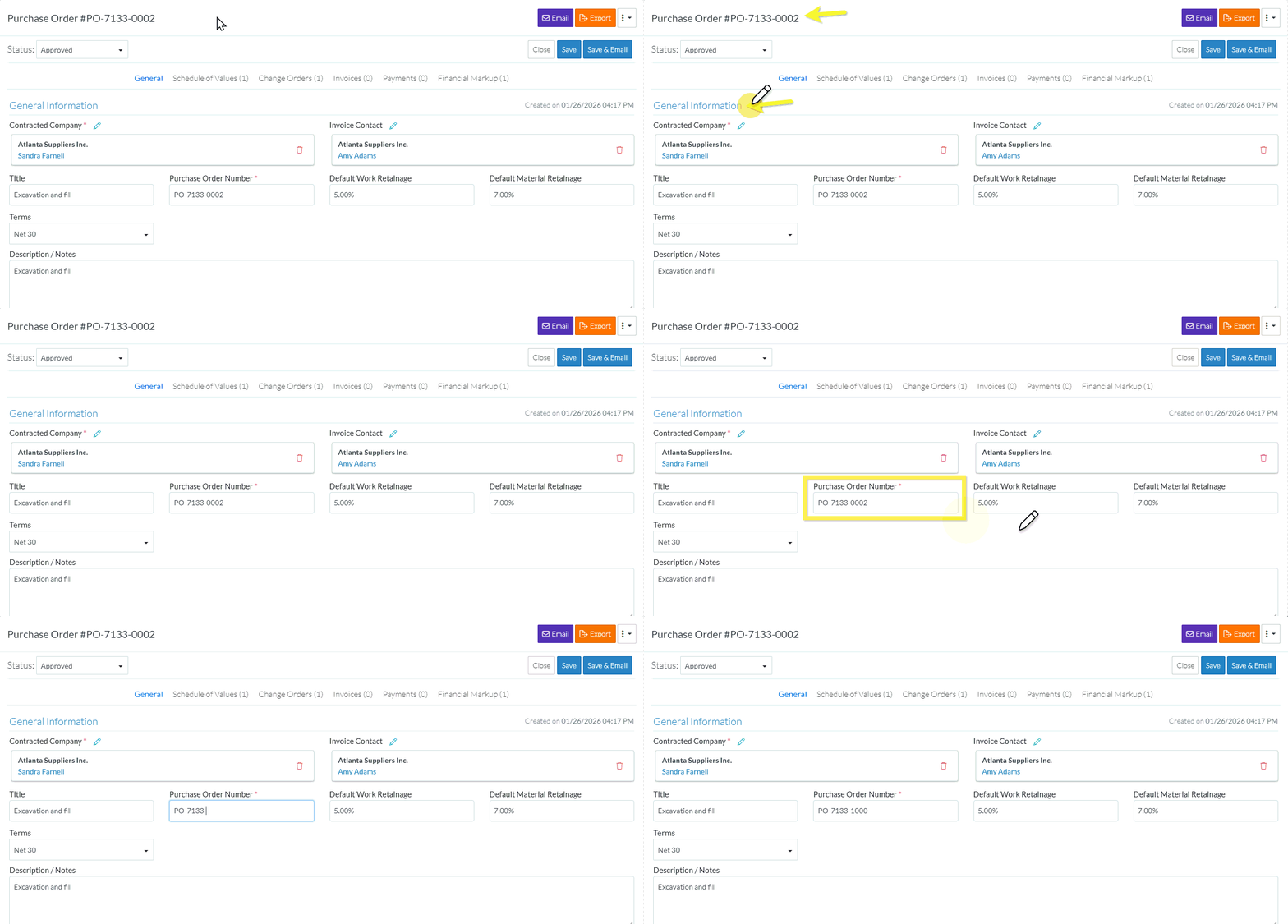
Change the Purchase Order Number as required.
It can be any format when entered manually.
Click here for editing the Purchase Order Number on an existing Purchase Order
Enter or Change Other Information in the General Section
Click here for entering or changing other information in the General Section
To change the Contracted Company, see Purchase Order - General - General Information - Contracted Company.
To enter, change or remove the Title, see Purchase Order - General - General Information - Title.
To change or remove the Purchase Order Number, see Purchase Order - General - General Information - Purchase Order Number.
To enter, change or remove the Default Work Retainage, see Purchase Order - General - General Information - Default Work Retainage.
To enter, change or remove the Default Material Retainage, see Purchase Order - General - General Information - Default Material Retainage.
To enter, change or remove the Terms, see Purchase Order - General - General Information - Terms.
To enter, change or remove the Description/Notes, see Purchase Order - General - General Information - Description/Notes.
To enter, change or remove the Internal Notes, see Purchase Order - General - General Information - Internal Notes.
To enter, change or remove the Payment Terms, see Purchase Order - General - General Information - Payment Terms.
Enter or Change Other Information or Save, Close or Save & Email the Purchase Order
Add, Edit or View other information for the Purchase Order, see More Information below.
OR
If available/applicable, click the Save  button (at the top or bottom of the form) to save the Purchase Order and close the form.
Click here for more information on the Save function.
The Save function saves the Purchase Order including any information on the General, Schedule of Values and Financial Markups Components (if applicable).
The Purchase Order - View/Maintain form is closed and the list the function was invoked from displays. See Next Steps below.
OR
If available/applicable, click the Save & Email  button (at the top or bottom of the form) to save the Purchase Order and email it.
Click here for more information on the Save and Email function.
The Save & Email button saves the Purchase Order including any information on the General, Schedule of Values and Financial Markup components (if applicable) and sends an email with a link to the Purchase Order in JobPlanner (and optionally include the Purchase Order as a PDF attachment in the email). The Email can be sent to any Project Contacts. The Email Commitment form displays, see Email Commitment.
OR
Click the Close  button (at the top or bottom of the form) to close the form.
Click here for more information on the Close function.
If information was changed, then an additional prompt displays indicating there were changes and additional prompts on what to do.
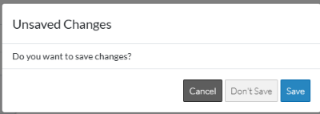
Click the Cancel
 button to cancel the Close action and return to the Purchase Order - View/Maintain form (see the steps above)
OR
Click the Don't Save
 button to cancel changes to the Purchase Order. The list the function was invoked from displays, see Next Steps below.
OR
Click the Save
 button to save the Purchase including any information on the General, Schedule of Values or Financial Markups components (if applicable). The list the add or edit function was invoked from displays, see Next Steps below.
More Information
When creating a new Purchase Order, see New Purchase Order (Overall Steps)
OR
When editing an existing Purchase Order, see Purchase Order - View/Maintain (Overall Steps)
